


Back to Blogs
Role of Limiter in an Integrated Mite Management Strategy in Poultry

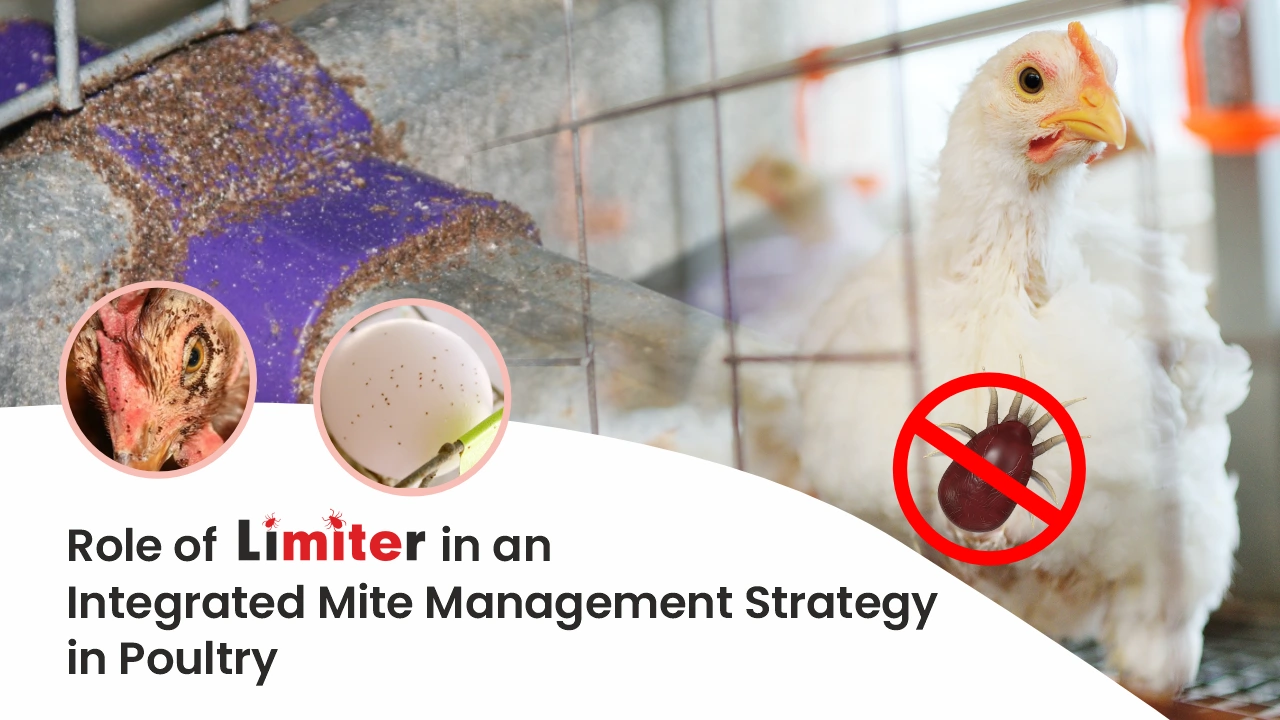
Red mite (Dermanyssus gallinae) infestations are one of the most recurring and expensive issues in poultry production. The small parasite crawls about and feeds on birds’ blood, causing severe irritation, stress, and lowered egg production. They are particularly resilient. In poultry farming, red mites will live inside bark cracks of trees, waiting for long periods of time between feeds. In laying hens, long-term infestations can result in anemia, compromised immune function, and even mortality when infestations are extreme. The red mite life cycle develops quickly—from egg to adult in just a few days under ideal conditions. This makes continuous infestation cycles difficult to break using traditional means, highlighting the need for effective red mite control in poultry.
Poultry Red Mite Life Cycle:

Integrated Pest Management (IPM) is a widely used sustainable poultry farming method for controlling pest species in horticulture and offers a potential long-term solution for the effective and natural red mite control in poultry. The following are the steps involved in integrated pest management for poultry:
Monitoring & Early Detection
Check the poultry shed carefully at least weekly, including usual red mite hideaways: under perches, inside nest boxes, in crevices or in joints, under slats, and on or around conveyor belts. Utilize corrugated cardboard mite traps or sticky traps, or perform frequent inspections with a bright flashlight during night hours when mites are more active. Effective monitoring is key to poultry mite prevention.
Biosecurity & Prevention
Practicing good biosecurity is key to preventing the introduction and transmission of red mite infestations. Seal cracks, crevices, and joints in poultry farms to minimize areas where mites can settle and reduce hiding places. Avoid mite introduction from contaminated equipment, crates, and clothing by adopting cleaning protocols and issuing protective equipment. Prevent wild birds by closing entry points, removing nests, and maintaining clean feed areas to minimize cross-contamination risk. Such preventive measures contribute significantly to sustainable poultry farming.
Cleaning & Disinfection
Begin by thoroughly clearing out manure, litter, feathers, dust, and debris from the shed. Be sure to clean, especially the perches, slats, nest boxes, and all joint areas of the structure—these are popular mite locations. Remember equipment like feeders, crates, and conveyors that also provide shelter for mites. Spray an approved insecticide, acaricide, or disinfectant, using a rotation of active ingredients to prevent resistance. Structural joints, corners, and crevices should be given particular attention. Combining cleaning with natural red mite treatment options can help enhance long-term control.
Conventional Treatment
In poultry farming, the primary approach for treating and managing mite infestations has long been the use of chemical acaricides. However, their continuous use has led to the emergence of mite resistance, limiting their effectiveness. Additionally, the use of these chemicals has concerns about chemical residues in food and adverse environmental effects.
Therefore, farmers are increasingly seeking safe and effective natural alternatives with high efficacy and species selectivity to replace traditional chemical acaricides.
LIMITER: A Natural Solution for Poultry Red Mite Management
Limiter is a natural red mite management supplement for poultry. It provides effective red mite control in poultry. Using a unique combination of plant-derived components, Limiter targets blood-sucking stages of mites with a three-way mode of action that helps in breaking the red mite life cycle naturally:
- Gustatory Avoidance
- Olfactory Repellence
- Contact Toxicity

Mechanism of Action of LIMITER
The essential oil in the Limiter acts via a dual neurotoxic mechanism: first, by competitive inhibition at postsynaptic acetylcholine receptors, preventing normal acetylcholine binding, and second, by inactivating acetylcholinesterase, the enzyme responsible for breaking down acetylcholine. This dual action results in persistent stimulation of muscle cells. The resulting hyperstimulation eventually leads to muscle fatigue, paralysis, and death in red mites.

“Say Goodbye to Poultry Red Mites with Limiter!”