


Back to Blogs
Improving Energy Metabolism and Milk Yield in Dairy Cattle through Phytogenic Choline – Vincholine

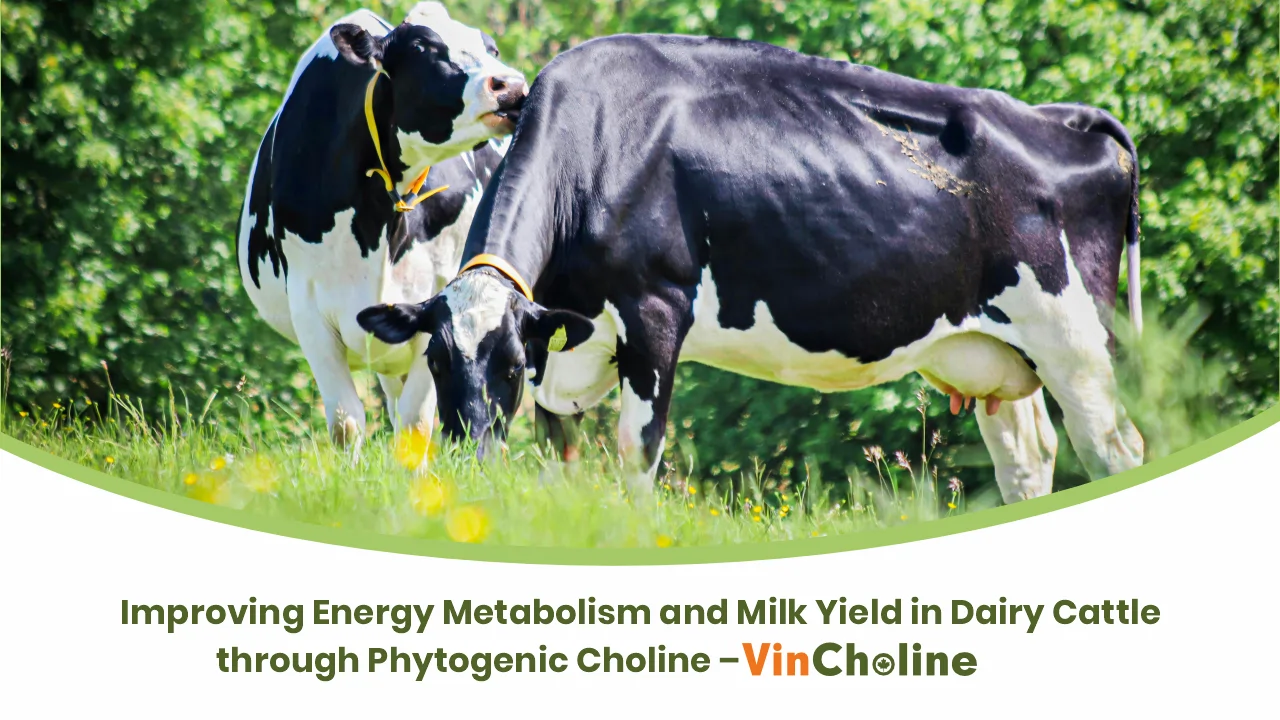
In ruminants, choline is an essential nutrient vital for fat metabolism and liver health, especially during the transition period of lactation. It is necessary for the liver to produce very low-density lipoproteins (VLDL), which transport fats out of the liver, preventing their accumulation as triacylglycerols. Without adequate choline, the liver can accumulate excess fat, leading to fatty liver syndrome, and overproduce ketones, leading to ketosis, a costly metabolic disorder. Choline is particularly important during the transition period when cows experience negative energy balance and mobilization of body fats, making them susceptible to metabolic diseases. Adequate choline availability also improves the efficiency of lipid metabolism, which directly impacts milk yield and overall milk production in dairy cows. Supplementation can lead to a reduction in metabolic diseases like fatty liver and ketosis, improving the cow’s overall health and well-being.
Why is Choline Important in Dairy Cattle?
Fat mobilization and liver health
Choline is a methyl donor and part of phosphatidylcholine, required for very low-density lipoprotein (VLDL) assembly and export. This assists in mobilizing non-esterified fatty acids from exiting the liver as triglycerides, reducing the threat of fatty liver and clinical/subclinical ketosis in early lactation.
Transition Period Nutrition
Dairy cows experience stress during the transition period because of the negative energy balance. Consequently, the body fats are mobilized to provide sufficient energy to the body. The body fats must be converted into VLDL in the liver to be utilized as a source of energy by the various tissues of the body. Choline supplementation during this period maximizes VLDL packaging in the liver.
Composition and yield of milk:
Feeding a choline-rich diet to cows at parturition enhances milk yield and occasionally fat and energy-corrected milk, especially in cows facing extreme negative energy balance. Response size is inconsistent and dependent on parity, body condition, and feed.
Reproduction & overall metabolism:
Through its promotion of liver health and methylation potential, choline could assist overall metabolic resistance during the transition period, which can indirectly enhance reproductive performance and health.
Limitations of Using Choline Chloride:
Pure synthetic choline chloride is hygroscopic in nature, which leads to storage instability. It can be metabolized by gut microbes into trimethylamine (TMA), a potentially harmful compound. Phytogenic choline can replace synthetic choline chloride, which varies in how well it protects choline in the rumen and delivers it where needed.
Choline stability in plants:
In plants, choline is a component of complex, lipid-bound molecules, primarily phosphatidylcholine. Since it is not in a free form, a greater proportion of the choline in whole, unprocessed, plant-based solution can bypass the rumen and reach the small intestine, where it can be digested and absorbed.
Vincholine
Vincholine, predominantly in the form of phosphatidylcholine, offers a superior alternative. Besides being phytobiotic, it offers secondary metabolites with different liver health-enhancing properties. Vincholine has intrinsic bioactivities on liver physiology, metabolism, and ensures maximum bioavailability. Phosphatidylcholine bypasses several ATP-dependent conversion steps, reducing energy expenditure and ensuring more effective cellular utilization. By minimizing oxidative losses, avoiding toxic metabolite formation, and improving nutrient efficiency, Vincholine supplementation supports better liver health, reproductive performance, and milk production. It plays a crucial role in dairy cattle, particularly during the transition period (around calving) and lactation.
Benefits

- Increases milk yield
- Supports milk production and milk fat synthesis
- Supports fat metabolism
- Reduces the risk of fatty liver syndrome
- Reduces metabolic disorders